
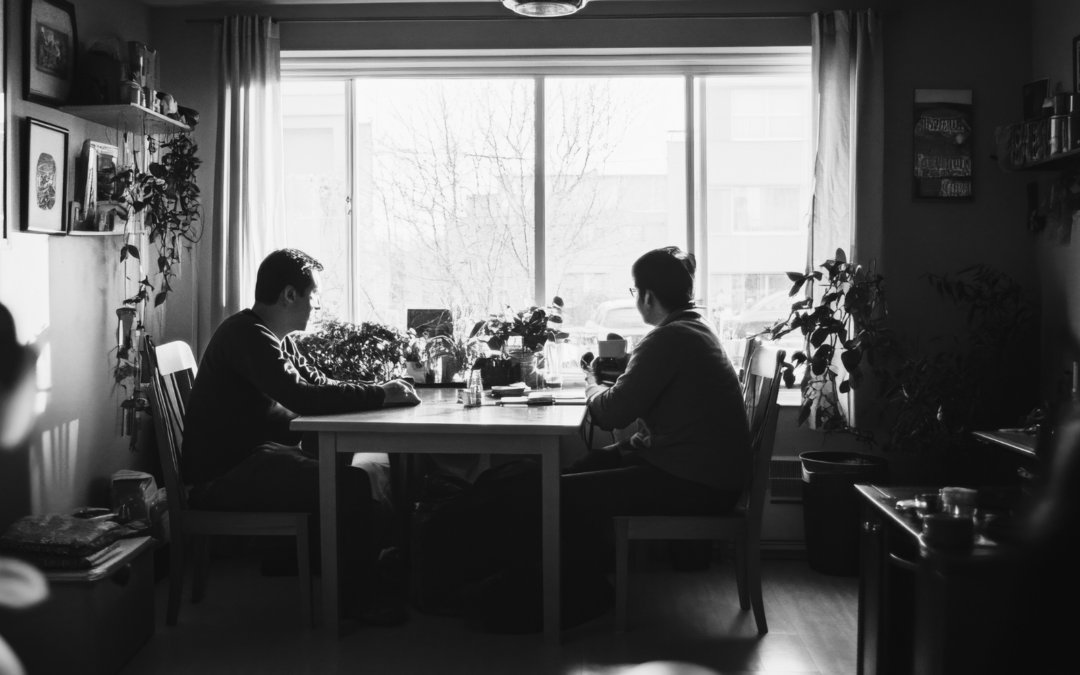
In a time when so much of life happens through screens, headlines, and soundbites, it can feel harder than ever to truly talk to one another. Not debate. Not persuade. Just talk. Listen. Sit together long enough to remember our shared humanity.
In this episode of A Place in the Conversation, we sat down with Elizabeth Morrow, and what unfolded was less an interview and more a reminder of something ancient and deeply human: the power of the table.
Elizabeth’s story begins, fittingly, around a table. As the eleventh of twelve children, gathering for meals was not optional. You showed up, you found your seat, and you learned how to live alongside other people. That long wooden table, passed down through generations, became a place of nourishment, learning, conflict, laughter, and belonging. Those early lessons stayed with her.
Years later, they shaped her work in public service, her decision to run for Congress in Pennsylvania, and eventually, her response to a question many people are asking today: What do we do with all this division?
Elizabeth didn’t see the conversations she was told were impossible. Traveling across five counties, sitting one-on-one with people from all walks of life, she heard something different. People wanted to talk. They wanted to be heard. They wanted to connect, even when they disagreed. What they lacked wasn’t interest or compassion. It was space.
That realization led to The Civil Graces Project and eventually to the Centerville Café and Marketplace, a place intentionally designed to bring people together. Not just to eat, but to linger. To share tables. To sit next to strangers. To create room for conversation to happen naturally.
What struck us most in this conversation was Elizabeth’s insistence that disagreement is not the enemy. Some of the most meaningful conversations, she noted, don’t end in agreement at all. They end in understanding. In curiosity. In a recognition that there is something created between two people when they truly engage. Something that doesn’t belong to either one alone.
She spoke about hospitality not as entertainment, but as healing. The word itself shares a root with “hospital,” a place where restoration begins. Around a table, with food and time and presence, something shifts. People soften. Stories surface. Assumptions loosen their grip.
This matters deeply to us. Especially as people navigate loneliness, grief, and isolation. As someone living alone for the first time, I shared how difficult it can be to initiate conversation, even in social settings. Elizabeth’s response was gentle and practical. Not everyone wants to talk, and that’s okay. But often, a simple question, a moment of attention, an invitation to sit can open a door someone didn’t know how to open themselves.
The vision Elizabeth shared goes far beyond one café or one community. It’s about reclaiming everyday spaces as places of belonging. Picnic tables. Coffee shops. Dining rooms. Even political spaces, where she dreams of bringing big tables back into Washington, where decisions were once shaped over shared meals and honest conversation.
At its heart, this episode is a reminder that connection is not complicated, but it does require intention. It asks us to put down our phones. To pull up another chair. To make room. To believe that there is nothing dangerous about sharing ideas, except that they might move us to act.
We all have the ability to create a place in the conversation. We don’t need permission. We don’t need perfection. We just need to start by setting the table.
And then, see who shows up.
Listen to the full podcast: Gathering at the Table: Turning Conversation into Community